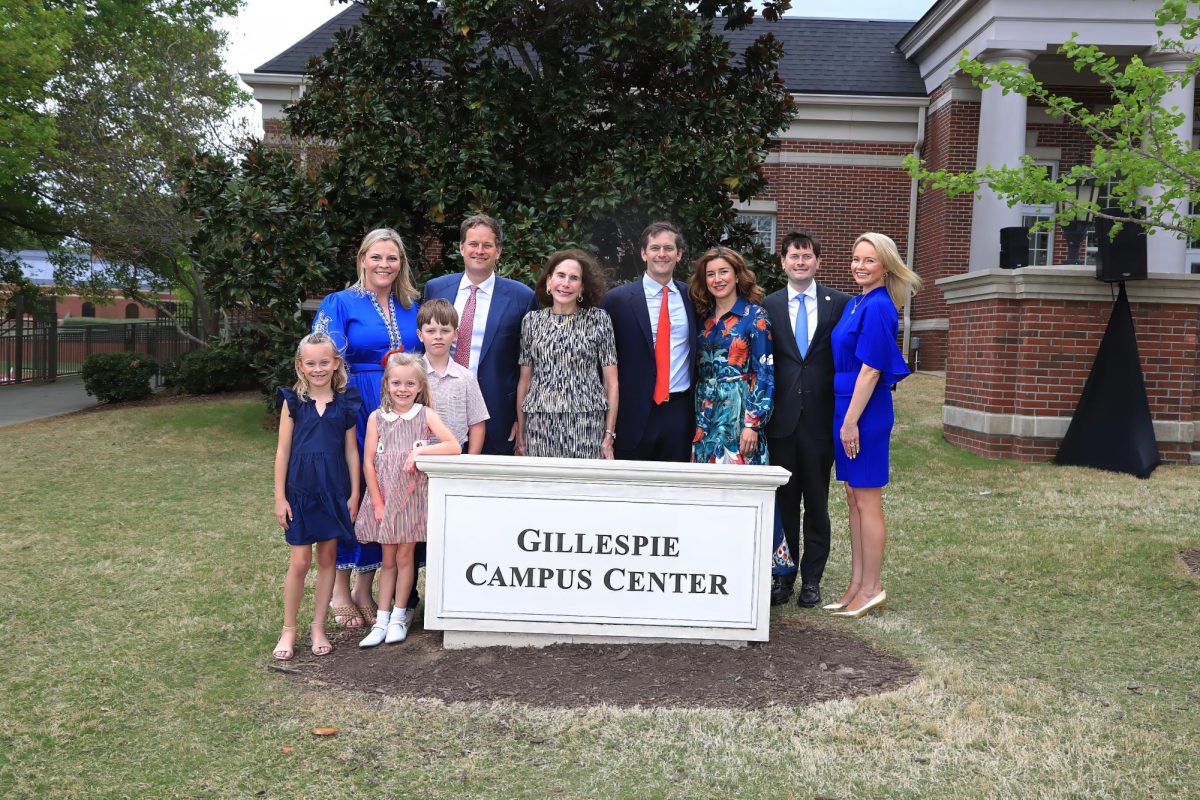
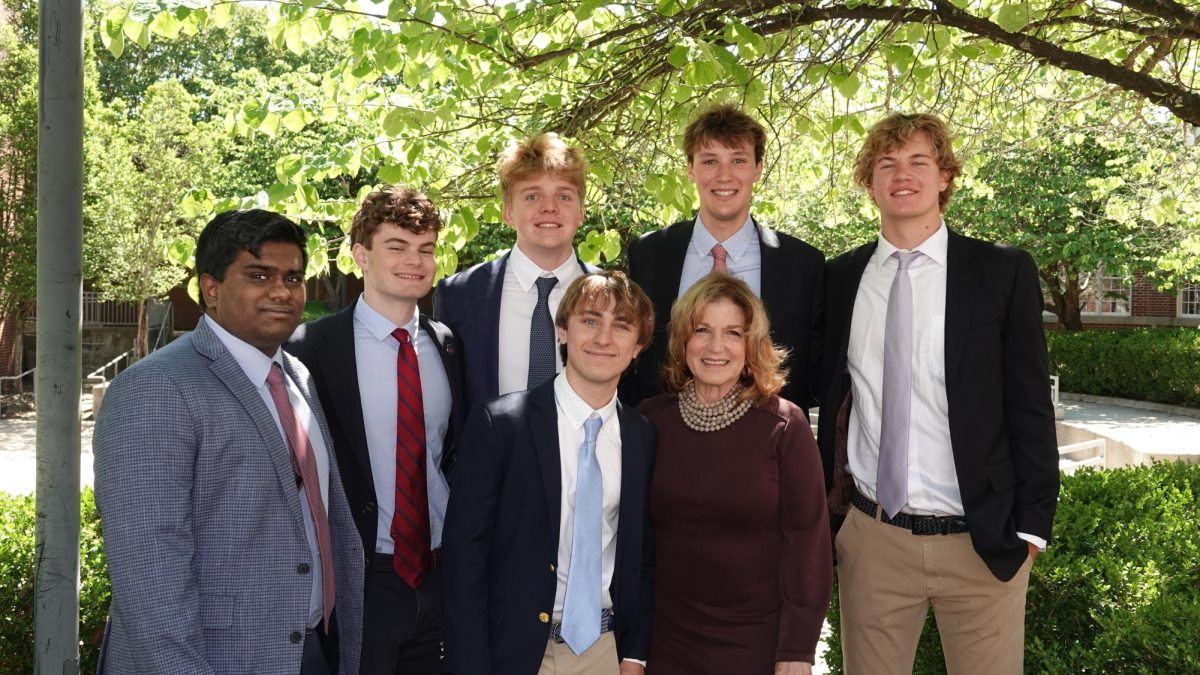
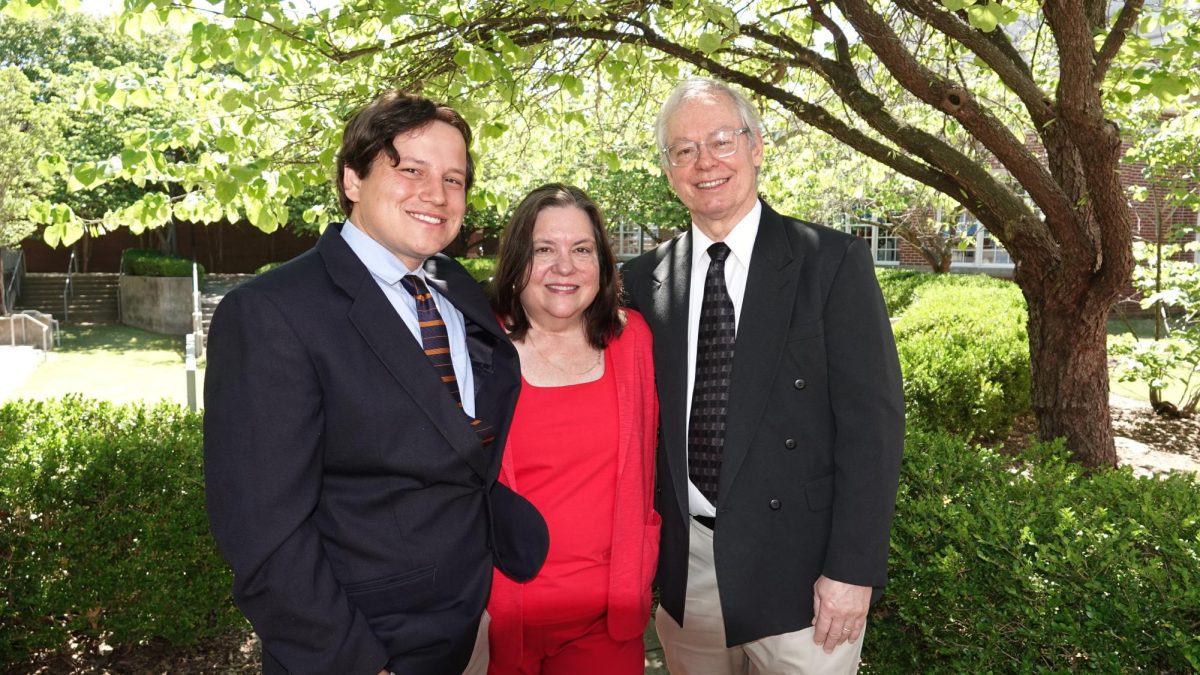
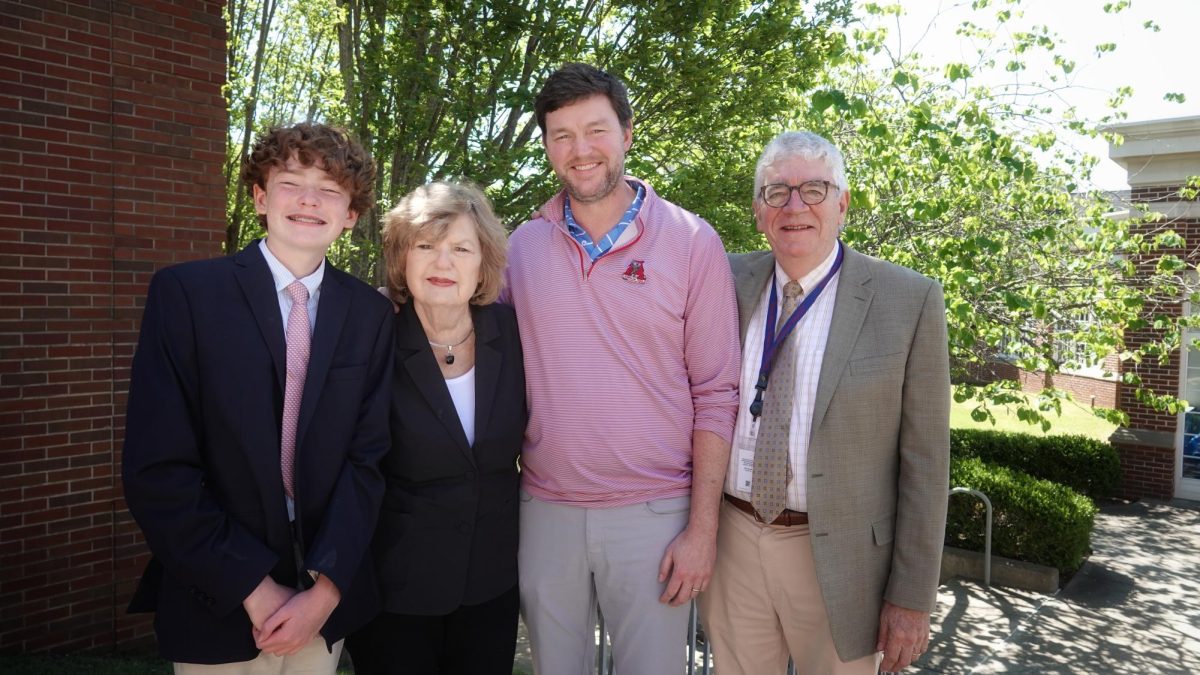




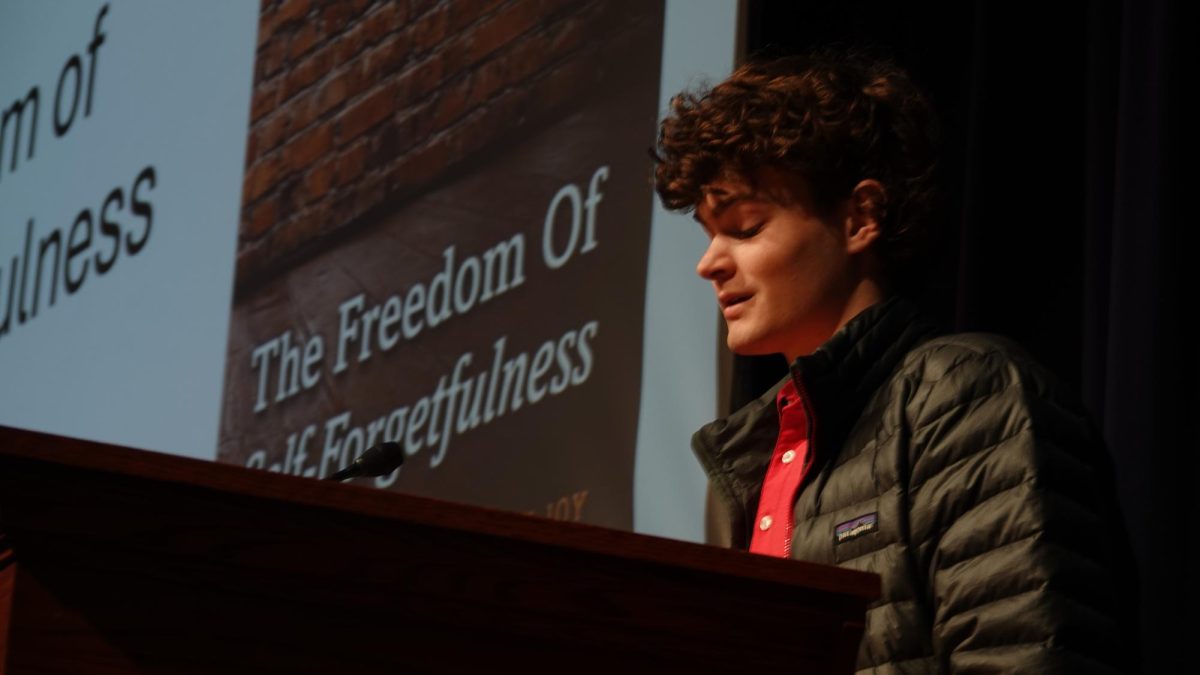






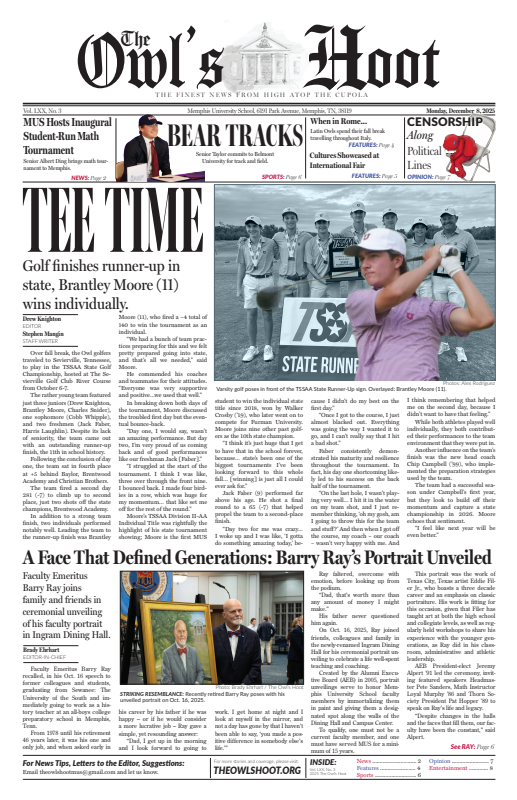

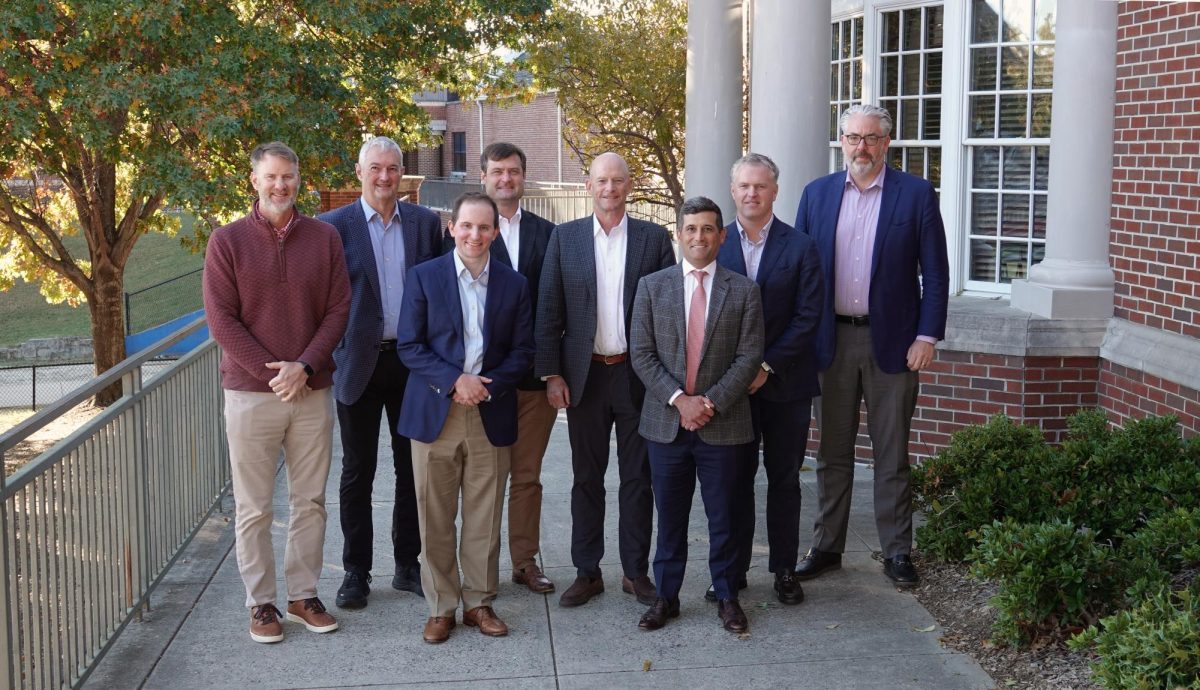
At chapel on Monday, Nov. 10, Associate Headmaster and Head of Lower School McKee Humphreys ’01 and National Alumni Advisory Council Chairman Wellford Tabor ’86 presented the inaugural National Alumni Advisory Council to students and faculty.
The alums spent Monday meeting with faculty and students at luncheons and specialized breakout sessions on topics such as law and private equity, as well as touring campus and the construction zones.
“The Alumni Advisory Council was created for the purpose of more effectively engaging mission-aligned, non-resident alumni to assist and strengthen MUS’ ongoing efforts to live more fully its time-honored mission,” described Humphreys.
According to the charter, the council is “limited to advising and providing recommendations to the Board of Trustees only on matters provided by the Board of Trustees for the Council’s consideration.” Their duties include providing insight to school leadership and expanding school advocacy and visibility, among others.
Membership is limited to non-resident alums, with a three-year term limit.
The group of alums visiting on campus consisted of graduating years ranging from 1965 to 2003, and represented various cities such as San Francisco, Dallas, Texas, New York, Atlanta and Charlotte, N.C., according to Humphreys.
“These guys are back in town giving back to MUS long after they’ve graduated. Guys, when you graduate, and when you graduate college, they will pick up your call,” said Humphreys.
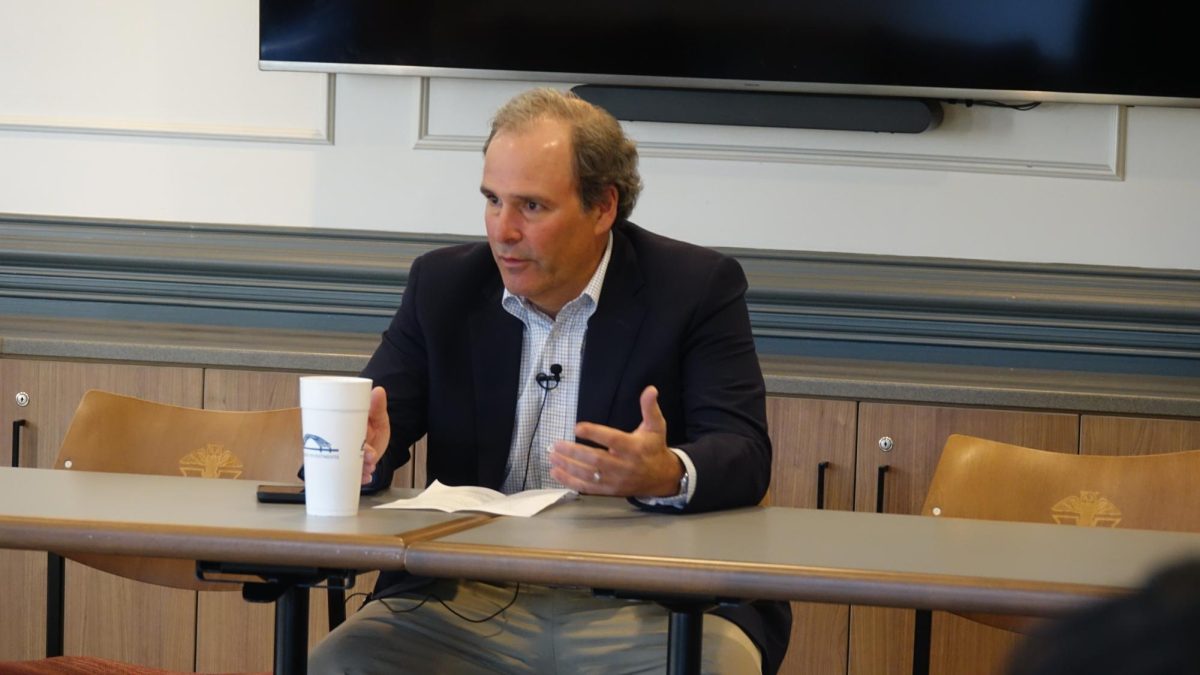
Tabor, who pursued a career in investment banking and private equity after graduating with a BA in history from the University of Virginia and an MBA from Stanford University, spoke on behalf of the Alumni Advisory Council. Tabor has been recruited by families to build capital, most recently joining the Haslam family at HF Capital, as head of direct investments.
At MUS, Tabor was a three-sport athlete, playing as defensive end on the 1985 state championship football team. He was also drummer for his band, “The Wooly Mammoths.”
Tabor punctuated his speech with shock that he had been invited to speak at chapel; he admitted that his time at MUS involved slacking.
“There was a theme to my time at MUS: I was an underachiever. Socially, my teenage years were a 10. It was pretty much all that I thought about. I had an awesome group of friends… we stay in touch. Literally every day I’m getting between five and 10 texts from these guys.”
“I was the drummer in the high school band, which to me was being in the Beatles… I’m pretty sure I peaked at 17.”
Tabor discussed his average academics at MUS, ending up with a class ranking of 33/86.
“I was consistently inconsistent…I was nowhere near the top of my class.”
He conceded that his athletic ability was undercut by his lack of work ethic.
“In the seventh, eighth, ninth grade, I was bigger than most people. I was faster than most people. So, I got to play all the skill positions. But when the guys were out there running sprints getting faster, I wasn’t. So by the end of high school, I gained a bunch of weight to play defensive end. ”
“Those were my choices, and I paid for them.”
Throughout his speech, Tabor encouraged students to make the right decisions and get on the right track, attributing much of his early success to luck. However, he believes that a postgraduate switch to the self-described “giving my best thing” was what allowed him to continue his career.
“I’ve tried to stick with the giving my best thing for the rest of my career, and it’s worked out pretty well. No matter how hard you work, though, sometimes you’re going to get bad bounces. I’ve lost jobs, I’ve had investments lose money. That’s life.”
Tabor used his lack of motivation as an MUS student to convey life lessons to the audience, such as kindness and hard work.
“Now from looking at me, you’re probably thinking… that old baldheaded guy… I’m never going to look like that. You probably will, and you might actually end up looking even worse. But you’ve got 40 years before that happens to you. So you’ve got to make a decision of what’s going to happen in the next 40 years. So don’t be the person that I was. Do join me in trying to work at being the best person you can reasonably be. The one who makes the most of our gifts. The one who makes the most of our gifts… who loves our neighbor, who loves ourselves… who is man enough to admit mistakes, to apologize when they screw up.”
“It’s all out there for you, fellas. Go get it,” Tabor closed his speech.
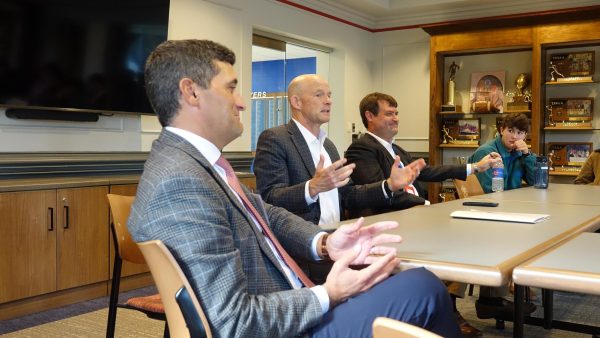
Following chapel, council members gave specialized workshops to students. Tabor and Robert Faber ’98 led the student workshop “Hedge Funds, Private Equity, and Family Investment Offices – What are they and what do they do?”
Partner at the Sherrard Roe Voigt & Harbison law firm Eric Osborne ’00 held a session about impactful legal cases called “Law and Justice: Tools for Positive Change.”
These workshops for students were just a glimpse into what Humphreys described as the work of the National Alumni Advisory Council:
“When we talk about MUS truly being a school for a lifetime, these guys are back in town, giving back to MUS, long after they graduated.”