









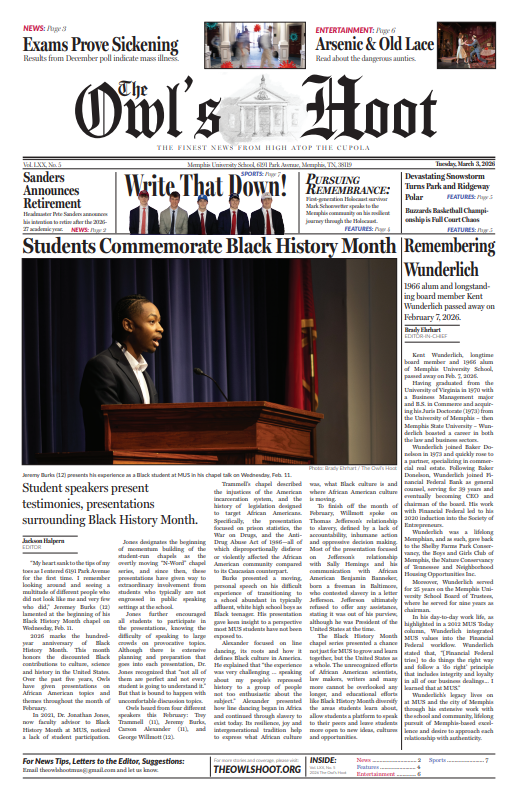

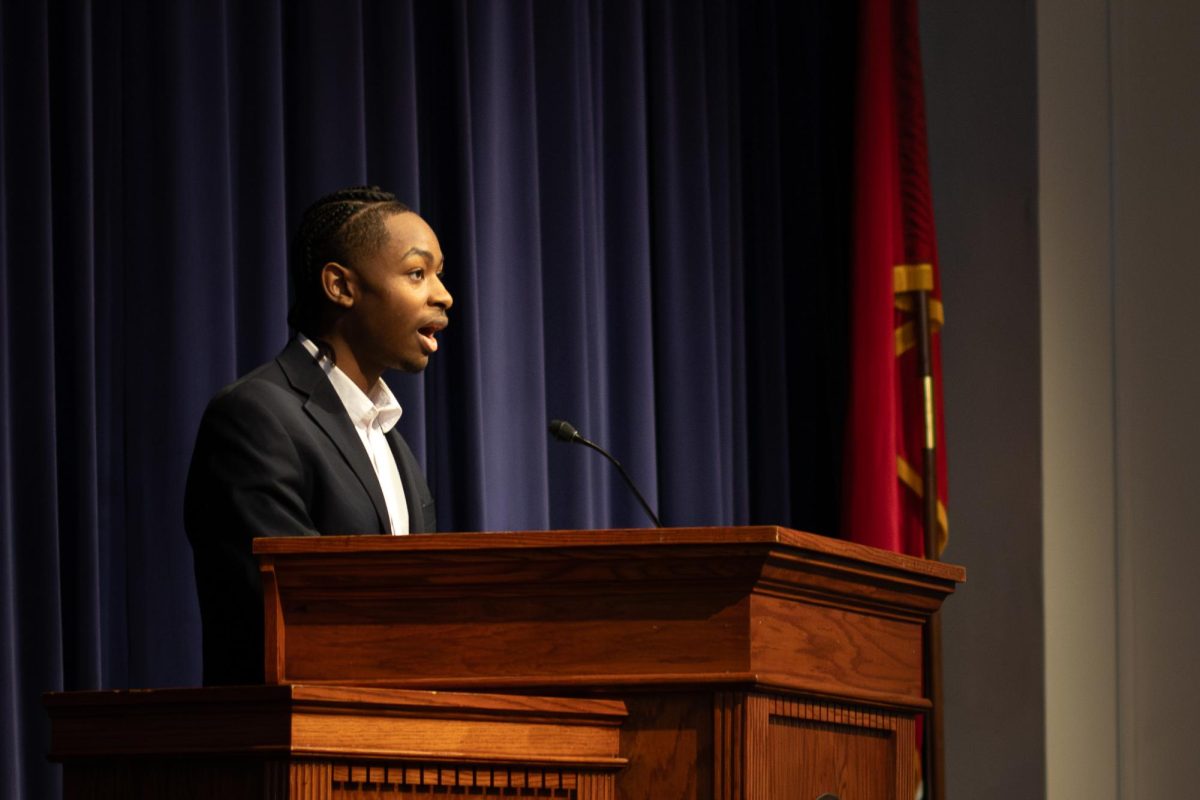
“My heart sank to the tips of my toes as I entered 6191 Park Avenue for the first time. I remember looking around and seeing a multitude of different people who did not look like me and very few who did,” Jeremy Burks (12) lamented at the beginning of his Black History Month chapel on Wednesday, Feb. 11.
2026 marks the hundred-year anniversary of Black History Month. This month honors the discounted Black contributions to culture, science and history in the United States. Over the past five years, Owls have given presentations on African American topics and themes throughout the month of February.
In 2021, Dr. Jonathan Jones, now faculty advisor to Black History Month at MUS, noticed a lack of student participation. Jones designates the beginning of momentum building of the student-run chapels as the overtly moving “N-Word” chapel series, and since then, these presentations have given way to extraordinary involvement from students who typically are not engrossed in public speaking settings at the school.
Jones further encouraged all students to participate in the presentations, knowing the difficulty of speaking to large crowds on provocative topics. Although there is extensive planning and preparation that goes into each presentation, Dr. Jones recognized that “not all of them are perfect and not every student is going to understand it.” But that is bound to happen with uncomfortable discussion topics.
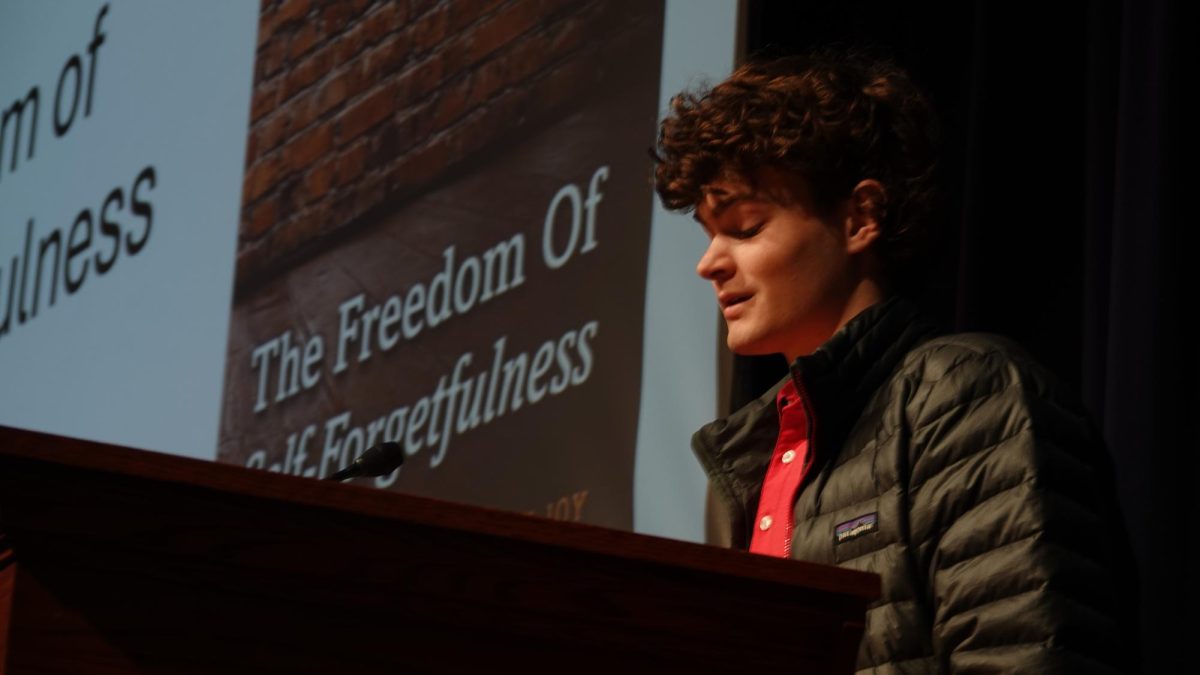
Owls heard from four different speakers this February: Trey Trammell (11), Jeremy Burks, Carson Alexander (11) and George Willmott (12).
Trammell’s chapel described the injustices of the American incarceration system, and the history of legislation designed to target African Americans. Specifically, the presentation focused on prison statistics, the War on Drugs, and the Anti-Drug Abuse Act of 1986—all of which disproportionally disfavor or violently affected the African American community compared to its Caucasian counterpart.
Burks presented a moving, personal speech on his difficult experience of transitioning to a school abundant in typically affluent, white high school boys as Black teenager. His presentation gave keen insight to a perspective most MUS students have not been exposed to.
Alexander focused on line dancing, its roots and how it defines Black culture in America. He explained that “the experience was very challenging … speaking about my people’s repressed history to a group of people not too enthusiastic about the subject.” Alexander presented how line dancing began in Africa and continued through slavery to exist today. Its resilience, joy and intergenerational tradition help to express what African culture was, what Black culture is and where African American culture is moving.
To finish off the month of February, Willmott spoke on Thomas Jefferson’s relationship to slavery, defined by a lack of accountability, inhumane action and oppressive decision making. Most of the presentation focused on Jefferson’s relationship with Sally Hemings and his communication with African American Benjamin Banneker, born a freeman in Baltimore, who contested slavery in a letter Jefferson. Jefferson ultimately refused to offer any assistance, stating it was out of his purview, although he was President of the United States at the time.
The Black History Month chapel series presented a chance not just for MUS to grow and learn together, but the United States as a whole. The unrecognized efforts of African American scientists, law makers, writers and many more cannot be overlooked any longer, and educational efforts like Black History Month diversify the areas students learn about, allow students a platform to speak to their peers and leave students more open to new ideas, cultures and opportunities.