



















Elmo, Arthur the aardvark, Curious George. Stephen Colbert, Jimmy Kimmel. Charlie Kirk.
This small list are just a few examples of media personalities who have experienced career or life-ending results due to political censorship.
In the past few months, the line which separated grim dystopian novels from reality has been blurred. Censorship through the president’s administration has been rampant, and political violence is taking hold of the nation.
Throughout President Trump’s campaign, one of his largest points was to continue “the reduction of Federal bureaucracy and waste,” which now includes public media outlets known for their left-leaning opinions and stories.
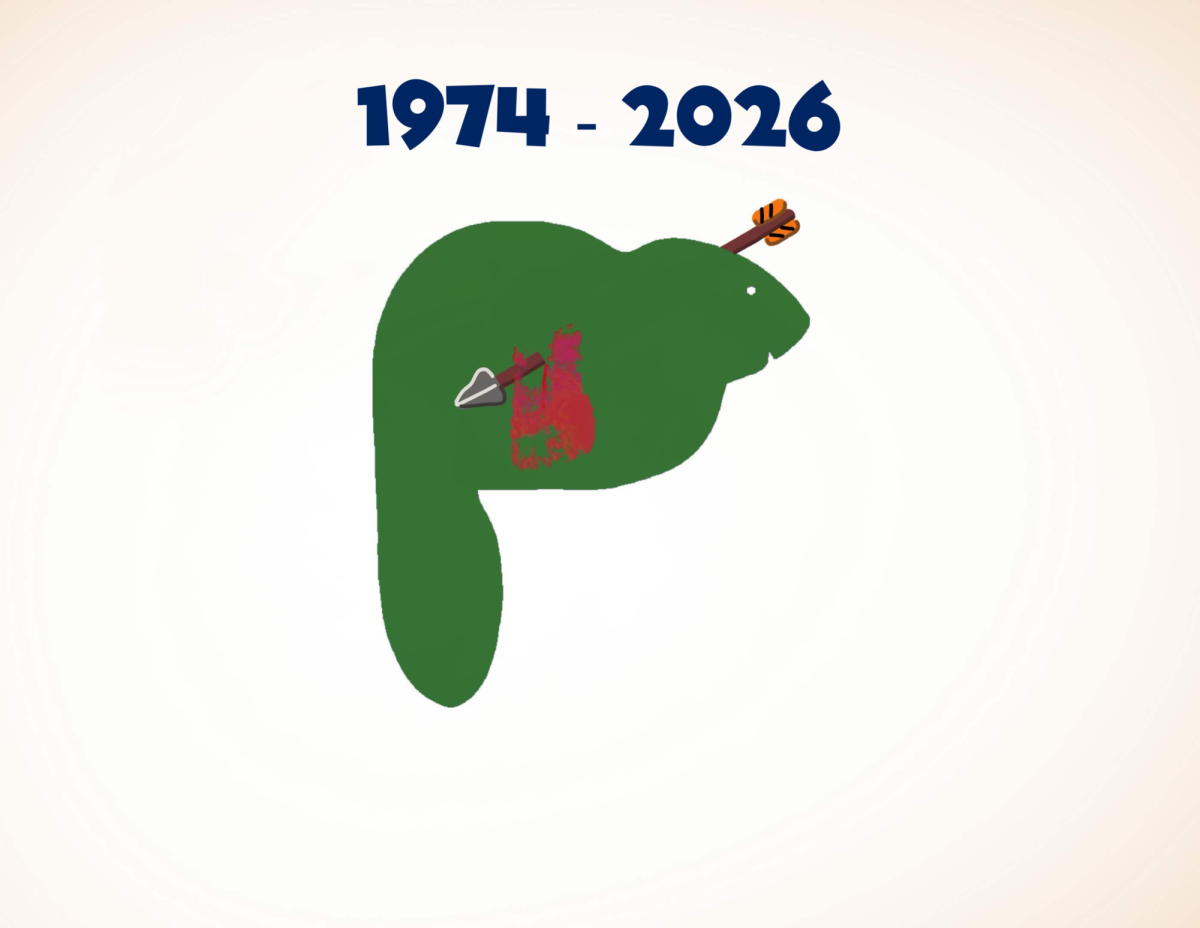
The GOP administration has cut most federal funds to PBS and its member stations. Childhood favorites like Elmo, Arthur the aardvark, Curious George and more might not be around for much longer. The empathy and thoughtfulness these programs instilled in children will no longer be so easily accessible for busy parents.
These cuts were enacted because Trump no longer wanted the federal government to fund broadcast services with “bias.” But silencing media outlets through economic means — is this not blatant breach of free speech and free press? And to what extent did “bias” outweigh the important educational aspects of PBS?
This cut not only applied to PBS, but a plethora of other media outlets — totaling in a cut of around $1.1 billion.
Notably, this cut included a slashing of funds to NPR.
NPR CEO Katherine Maher stated this cut was an “irreversible loss … [NPR] has enabled the flourishing of a uniquely American system of unparalleled cultural, informational, and educational programming, and ensured access to vital emergency alerting and reporting in times of crisis — all for about $1.60 per American, every year. Parents and children, senior citizens and students, tribal and rural communities — all will bear the harm of this.”
$1.60 per American seems small, and although the total cost is a hefty $544 million, this cost provides all Americans with important, necessary educational programming. For reference, the Department of War’s budget in 2025 is $895 billion, ~1500 times more. And with budget cuts looming over communication services, why has the same scrutiny not been applied to inflated defense spending?
The FCC (Federal Communications Commission) controls and regulates all communication by TV, radio, and all other communication avenues in the United States. Pertinently, to this administration especially, the FCC has the ability to freeze and essentially block corporate mergers when the two merging companies are media outlets. Previously, the FCC acted independently from the presidency, but with Trump’s appointment of Brenden Carr, the executive branch commands (in all practicality) the entirety of the commission.
Using this, the president has been able to pressure companies with potential legal measures, and Trump has even suggested that “TV networks should have their licenses ‘taken away,'” particularly those who shed negative light on his administration.
Recently, the public has seen this power in action. The removal and subsequent rehire of Jimmy Kimmel and the cancellation of Stephen Colbert are particularly obvious examples, with both broadcasters being left-leaning.
Silencing media outlets who voice their opinions reduces the amount of different opinions circulating, and leads to less important conversations about our government. If every opinion is the same, then opinion simply does not exist.
What would separate the United States from Panem in The Hunger Games or Oceania of 1984?
If politically active citizens cannot tolerate others’ opinions, this can lead to violence which threatens the very integrity of our union. As seen in the Civil War, Bacon’s Rebellion and recently Charlie Kirk’s assassination, violence precipitates further violence and political upheaval and is not a solution to disagreements.
The assassination of Charlie Kirk was done in order to silence his opinions, and has the same effect as Trump’s legal proceedings. Allegedly, the shooter who killed Kirk did so because he believed Kirk’s opinions precipitated hate. Kirk’s platform, Turning Point USA, was not only a conservative voice in college environments for politically active students, but also fostered lively debate and allowed interested college students and professors to express and debate their opinions openly. This violent act has only further polarized the United States, and can act as a catalyst for continued censorship and possibly violence.
With censorship on the rise by the entire political spectrum, I’m afraid.
Everyone will bear the effects of this. People will be afraid to voice their own opinion — a pillar of our society. Further polarization will ensue more violence and less cooperation. Bipartisan action needs to be taken to secure our country and prevent censorship from happening with such frequency.